
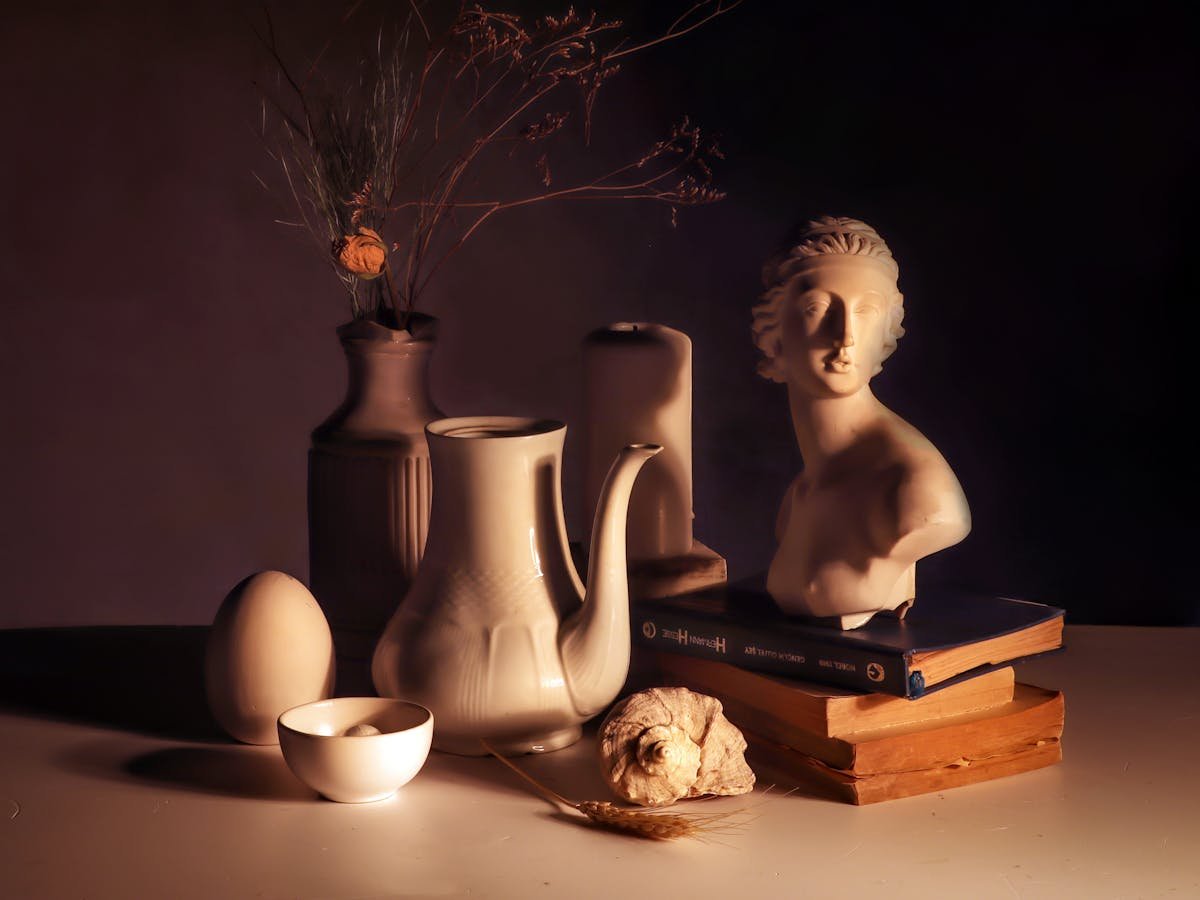
Decorating well is not about filling every surface or buying pieces simply because they match. The most memorable homes tend to feel considered rather than crowded, expressive rather than overly styled. Books, ceramics, art and decorative objects all have the power to shape mood, reveal personality and make a space feel layered, but only when they are used with purpose.
That is the difference between a home that feels calm, interesting and lived in, and one that feels like it has been assembled from disconnected trends. Intentional decorating is less about owning more and more about understanding why each piece is there, how it contributes to the room and what story it helps tell.
In living areas especially, styling choices often work best when they support the function of the room as much as the visual atmosphere. A stack of design books beside round side tables for the living room can soften a corner, create height variation and add a personal touch without forcing the space to feel overly dressed. It is this kind of quiet consideration that gives a room depth.
Start With Meaning, Not Just Appearance
One of the easiest ways to make styling feel more intentional is to stop thinking of objects purely as decoration. Instead, think of them as contributors to the personality of the room. A ceramic bowl collected while travelling, a framed print from a local artist, or a stack of novels you genuinely return to all carry more weight than generic filler ever could.
When you begin with meaning, the room naturally becomes more distinctive. You are no longer asking, “What else can I put on this shelf?” You are asking, “What deserves a place here?” That shift changes everything.
This does not mean every item in your home needs a profound backstory. It simply means that decorative choices should feel deliberate. A beautiful piece can absolutely earn its place on aesthetics alone, but it should still feel connected to the room around it rather than dropped in as an afterthought.
Let the Room Breathe
A common mistake in styling is assuming that interest comes from abundance. In reality, visual interest often comes from restraint. Leaving some breathing room around books, vases and artworks allows each piece to stand out. It also helps the home feel more refined.
Intentional decorating often involves editing rather than adding. If a console is full of objects, none of them get the attention they deserve. If a shelf is packed from end to end, the result can feel noisy, even if every item is attractive on its own.
Negative space is not emptiness. It is part of the composition. It gives the eye a place to rest and lets the pieces you do display feel more important.
Use Books as More Than Shelf Fillers
Books are one of the most useful styling tools in a home because they bring character, colour, texture and height all at once. More importantly, they say something about the people who live there. A home with books feels thoughtful and grounded, especially when those books reflect genuine interests.
That said, styling with books works best when it feels natural. Avoid arranging every shelf so perfectly that it loses all sense of life. Instead, mix vertical rows with horizontal stacks. Let some covers show. Pair books with smaller objects or ceramics, but do so sparingly.
Books can also be used beyond bookcases. A small stack on a coffee table, side table or bench can anchor other decorative pieces and create structure. They can elevate an object physically while also grounding it visually. A candle, ceramic vessel or small sculpture often looks more considered when placed on top of a couple of books rather than sitting alone.
Choose titles you actually enjoy having visible in your space. Art books, architecture books, novels, photography collections and cookbooks can all work beautifully depending on the room.
Bring in Ceramics for Texture and Softness
Ceramics have a unique ability to make interiors feel less rigid. Their organic shapes, matte finishes and handcrafted details introduce warmth in a way that polished or mass-produced décor often cannot.
A ceramic piece does not need to be elaborate to be effective. A simple vase with an irregular shape, a low bowl on a dining table, or a pair of handmade vessels on open shelving can add subtle texture and visual softness. These pieces help break up the hard lines of furniture, especially in modern homes where straight edges and flat surfaces dominate.
Intentional styling with ceramics is often about balance. If a room already has a lot of pattern, shine or colour, a more understated ceramic can create contrast. If the room feels too plain, a sculptural or textured piece can add just enough complexity.
Grouping ceramics also works well, but variety matters. Combining pieces of different heights, silhouettes and finishes tends to feel more curated than lining up matching items.
Think About Art as Atmosphere, Not Just Wall Coverage
Art is often treated as the final step in a room, but it deserves a more central role than that. The right artwork can influence the emotional tone of a space just as much as furniture or paint colour. It can bring energy, calm, depth or softness depending on what you choose.
Decorating intentionally with art means moving beyond the idea that blank walls simply need to be filled. Instead, think about what the room needs. Does it need warmth? Movement? A focal point? A more personal edge?
Large-scale artwork can make a strong statement without adding clutter, which is particularly useful in homes where you want personality without over-accessorising. Smaller pieces can be layered on shelves, leaned against walls or grouped into thoughtful arrangements. Both approaches can work well, but scale should feel connected to the furniture and proportions of the room.
It is also worth considering what kind of art you are drawn to over time, not just what feels fashionable in the moment. Pieces that continue to resonate with you tend to age much better in a home.
Decorative Objects Should Add Shape, Contrast or Character
Objects earn their place when they contribute something specific. That contribution might be sculptural shape, tonal contrast, material variation or emotional significance. Without one of those roles, an object can quickly become clutter.
This is where intentional styling becomes especially useful. Before placing something on a shelf or table, ask what it is doing in the arrangement. Is it adding height? Is it breaking up repetition? Is it introducing an organic line among sharper edges? Is it making the room feel more personal?
When decorative objects are chosen with a role in mind, arrangements become more coherent. A curved object can soften a square vignette. A dark-toned sculpture can ground a pale shelf. A small vintage piece can stop a room from feeling too new or too polished.
The point is not to justify every item in an overly technical way. It is simply to make sure objects are contributing, not just occupying space.
Create Groupings That Feel Collected
Vignettes work best when they feel assembled over time rather than staged in a single sweep. This often comes down to mixing categories and materials in a way that creates tension and harmony at once.
Books, ceramics, art and objects naturally complement one another because they each bring something different. Books add structure. Ceramics add texture. Art adds feeling. Objects add detail and individuality.
A successful grouping often includes:
- a taller piece to create height
- something horizontal or grounding
- an element with texture
- a personal or unexpected item
For example, a shelf might hold a small framed artwork leaning behind a ceramic vessel, with a short stack of books beneath and a small found object beside it. The combination feels layered, but not overworked.
Try not to make every grouping in the house follow the exact same formula. Repetition can be useful, but too much predictability makes styling feel mechanical.
Pay Attention to Material and Colour Relationships
Intentional decorating becomes much easier when you pay attention to how materials and colours speak to one another. This does not mean everything needs to match. In fact, rooms often feel richer when they do not. But there should still be some relationship between pieces.
A room with timber furniture, linen upholstery and soft neutral tones may benefit from ceramics with earthy glazes, art with subtle depth and objects made from stone, metal or glass. A bolder, more contemporary room might suit sharper contrast, darker finishes or more graphic artwork.
You do not need a rigid palette, but a sense of continuity helps. Repeating tones in small ways throughout a room can make disparate items feel connected. The same goes for finishes. If everything is glossy, the room may lack depth. If everything is rough and matte, it may feel flat. A mix creates interest.
Avoid Styling Every Surface the Same Way
One of the quickest ways for a home to feel overly decorated is when every shelf, table and corner is treated with the same level of attention. Not every surface needs a display. Some need function. Some need emptiness. Some need only one strong piece.
Intentional homes usually have variation. One shelf may be layered and expressive, while another remains simple. A sideboard may feature a single artwork and a bowl, while a coffee table carries books and one sculptural object. This variation helps the home feel natural and relaxed.
It also prevents decorative pieces from competing with each other. When every area tries to be a moment, the overall effect becomes diluted.
Let Personality Lead the Final Decisions
The most compelling interiors are not the ones that follow every styling rule perfectly. They are the ones that feel honest. A home should reflect the people living in it, their interests, memories, habits and aesthetic instincts.
That is where books, ceramics, art and objects become so powerful. They are often the elements that make a room feel specific rather than generic. They soften the structure of furniture and architecture with individuality.
Intentional decorating is not about making a home look expensive or overly designed. It is about making it feel thoughtful. It is about choosing fewer, better, more resonant things and giving them room to matter.
A More Considered Home Always Feels More Inviting
When books, ceramics, art and objects are chosen and placed with care, they do more than decorate. They create rhythm, atmosphere and story. They help a home feel settled, personal and quietly confident.
The goal is not perfection. It is connection. A room should feel like it belongs to the people in it, not like it is performing for an audience. Once styling becomes more intentional, the home starts to feel less like a collection of things and more like a space with real identity.
That is ultimately what makes decorative choices successful. Not how many there are, but how naturally and meaningfully they live together.